



Roundtable Discussion of Outside Directors
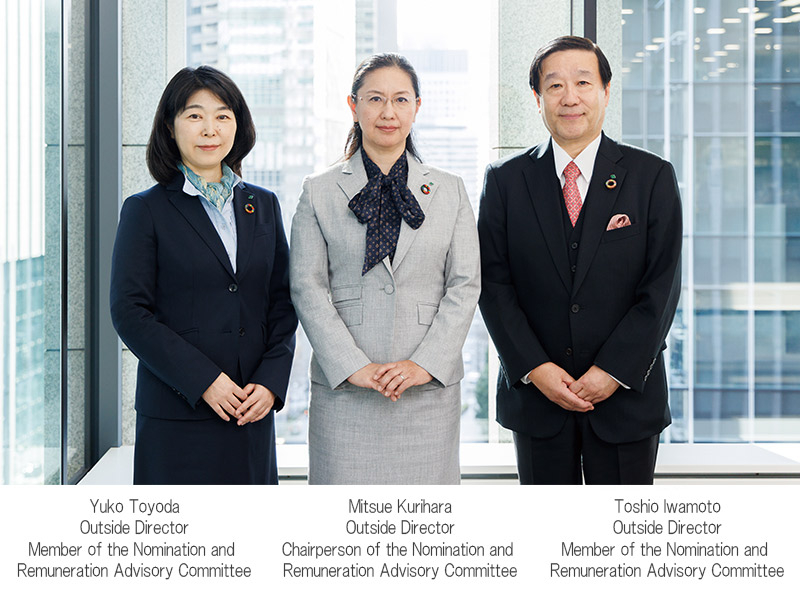
Enhancing Board effectiveness and capital efficiency
through multifaceted discussions
How do you evaluate the results achieved in the first year of Mission TREEING 2030 Phase 2?
Iwamoto: When Mission TREEING 2030 Phase 2 (hereinafter "Phase 2") was formulated, the business environment was on an upward trajectory. More recently, however, performance has not progressed as initially anticipated due to external factors such as the slowdown in the U.S. housing market and rising interest rates. I believe we have reached a stage where we must carefully assess the gap between the original plan and actual performance, and determine in which areas and by what means we can recover. On the other hand, the Housing Business in Japan has maintained solid performance, supported by strong product competitiveness and effective business strategies. I hope the Company will continue to make steady progress toward achieving the goals of Phase 2.
Kurihara: Compared with the strong performance achieved during the three years of Phase 1, we must candidly acknowledge that results in the first year of Phase 2 did not progress as expected. At the same time, I highly value the fact that the Company has continued to make proactive investments while maintaining financial discipline. Significant progress has also been made in organizational reforms. The Corporate Division has actively recruited talent and established systems for dispatching personnel to various regions. These efforts have strengthened both the human resources framework and global governance, steadily building the foundation for future growth. Furthermore, the establishment of the Real Estate Division has enabled the Company to strengthen management resources and develop risk management systems tailored to business characteristics that differ from those of the single-family homes business. Through these organizational reforms, I believe fiscal 2025 was an important year in laying the groundwork for the next stage of growth.
Toyoda: I view the first year of Phase 2 as having produced challenging results compared with the strong performance achieved in recent years. Against this backdrop, I believe the Company has entered a stage that requires a qualitative transformation of management resources, including talent and governance at overseas subsidiaries. Management, including the Board of Directors, has recognized these changes, engaged in thorough discussion, and implemented the necessary measures. Although the results may not yet be reflected in the numbers, I believe the foundations for future growth are steadily being established. I also note the progress made during the year in decarbonization-related initiatives both in Japan and overseas, including advances in forestry funds and organizational reforms aimed at promoting medium- to large-scale wooden construction.
Sukeno: While business performance was challenging in the first year of Phase 2, fluctuations caused by external factors are unavoidable in our business domains. What is important, however, is to find ways to minimize the impact of such factors more effectively than our competitors. Maintaining a competitive advantage requires identifying the strengths unique to Sumitomo Forestry and reinforcing them thoroughly. By concentrating management resources on areas where we possess distinctive strengths and refining them to a level that competitors cannot easily replicate, I believe the Company will be well positioned to achieve even greater growth when market conditions improve.
What are your views on the allocation of management resources and the optimization of the business portfolio as the Company works toward realizing its Long-term Vision?
Iwamoto: After visiting the Tsukuba Research Institute, I was reminded of the importance of investments that cannot be judged solely on the basis of short-term profitability. Research that creates long-term value—such as improving the earthquake resistance and fire resistance of wooden buildings and developing pollen-free cedar trees—is being steadily accumulated. These technological capabilities, spanning everything from fundamental research to practical applications, are strengths unique to Sumitomo Forestry and cannot be found in the overseas companies the Group has acquired. I believe that collaboration with local businesses overseas can generate entirely new value. Corporate retained earnings should first be allocated to capital investment, research and development, and human resource development. By applying the outcomes globally, Sumitomo Forestry can continue its evolution into a truly global company.
At the same time, areas related to our founding businesses, such as forests, cannot necessarily be evaluated solely in terms of the profitability of a particular segment. As a company that has positioned decarbonization as a core element of its Long-term Vision, Mission TREEING 2030, Sumitomo Forestry must continue to consider how the value of forests and wood can contribute to enhancing corporate value. I believe this commitment not only strengthens employees' sense of purpose, pride, and engagement but also contributes to attracting high-quality investment opportunities.
Sukeno: Effective portfolio management requires rigorous evaluation of the profitability of each business and management decisions that optimize the allocation of resources. Investors are willing to support companies that actively invest in highly profitable businesses and present clear growth strategies because they expect those investments to enhance corporate value over the long term, rather than prioritizing immediate shareholder returns. Conversely, when low-profitability businesses are retained for extended periods, a conglomerate discount tends to emerge, increasing investor demands for shareholder returns. Regular reviews of the business portfolio and the clear articulation of policies regarding low-profitability businesses are essential for enhancing corporate value.
Do you have any views on global governance and human resources development?
Sukeno: From the perspective of an Outside Director, effective global governance requires an organizational structure that ensures the independence of those who oversee and those who are overseen. To achieve this, it is important to establish a framework in which the Corporate Division directly supervises Regional Headquarters outside local reporting lines. I believe that clearly separating oversight and execution under the leadership of the Corporate Division is essential to ensuring effective governance.
From a governance perspective, one area I pay particular attention to is how we engage with acquired companies. These companies possess strengths that Sumitomo Forestry does not have and, in a sense, can be regarded as our teachers. The key is how to exercise governance while respecting those strengths. For example, inviting overseas business leaders to participate in Board of Directors meetings and creating opportunities for direct dialogue can be highly effective in fostering trust and sharing an understanding of the significance of joining the Group.
Kurihara: To make governance effective, it is important to create opportunities for dialogue, not just rely on numbers and documents. Even during the COVID-19 pandemic, we sought ways to facilitate online discussions between local management and directors at headquarters. Today, opportunities to visit local operations have increased, allowing us to engage directly with local management and employees and gain firsthand insight into construction sites and markets. Outside Directors then share these observations at Board of Directors meetings.
As our overseas businesses continue to expand, there are limits to a model in which only individual business divisions at headquarters engage directly with local operations. The role of Regional Headquarters will become increasingly important. Including how the Corporate Division supports and oversees these Regional Headquarters, I believe we are now at a stage where we must explore a new form of global governance that is best suited to the Sumitomo Forestry Group.
I also believe that global conferences bringing together overseas personnel in leadership positions can be highly effective. Through discussion and interaction, participants develop a stronger sense of unity and gain a clearer understanding of the organization they represent. When people from different cultural backgrounds come together, unique and valuable chemistry emerges. By continuing to create such opportunities and sharing what makes Sumitomo Forestry unique, we can cultivate truly global talent and organizations. It is also important not only to develop Japanese personnel but to nurture local talent as future management leaders.
Sukeno: In my view, the best way to develop global talent is to provide overseas experience early in their careers. Giving individuals responsibility for local operations and allowing them to grow through addressing challenges is invaluable. At the same time, it is equally important to bring talent from overseas into our organization and encourage collaboration in the workplace. Sending people abroad and welcoming people from abroad—these two approaches are the foundation of human resources development.
Toyoda: With regard to our overseas businesses, I believe the sustainability of our talent pipeline is also a key challenge. The fact that many expatriates remain in the same region for extended periods reflects the reality that our pool of qualified personnel has not expanded at the same pace as our business. We must simultaneously advance talent development, external recruitment, and the enhancement of the Corporate Division functions that support these efforts.
Are there any challenges you perceive regarding the effectiveness of the Board of Directors?
Toyoda: When discussing matters at Board of Directors meetings, I believe that not only the content of the materials but also the way information is presented is important. The materials are highly comprehensive, but discussions could be even more productive if greater efforts were made to organize and highlight the key points. In addition, sharing the principal issues related to agenda items in advance would further enhance the quality of discussions.
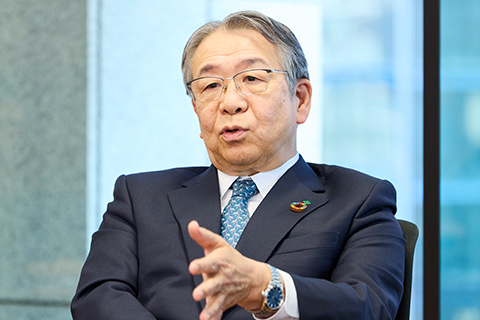
Kurihara: It is important to hear directly from the President, and fortunately there are many opportunities to do so. Recently, there have also been more opportunities for Divisional Managers to make presentations, and I feel that the quality of explanations provided at the General Managers meeting* and Board of Directors meetings has steadily improved. As a Board, we recognize and appreciate this progress. If the quality of explanations continues to improve, both the Board and management will be able to engage in even more effective discussions.
* This meeting primarily reviews the performance of each business and discusses future business strategies. Participants include all Directors and Audit & Supervisory Board Members, as well as the heads of each organization.
Toyoda: There are occasions during Board discussions when a perspective unique to the President helps clarify issues that had not previously been fully recognized. From the standpoint of an Outside Director, hearing the President's views directly is an essential part of understanding the Company's management. It is also important to have discussions that consider how each business is positioned within the overall portfolio, rather than focusing solely on reports from individual Divisions.
Iwamoto: Divisional Managers explain the facts and details, while the President organizes the discussion from a higher-level perspective. There are moments when a single comment from the President brings clarity to the discussion, and I believe a good balance has been achieved. The interaction itself contributes to the development of future management talent through the Board of Directors process.
Kurihara: Last year, in response to concerns raised both inside and outside the Company regarding the lack of clarity surrounding the President's succession plan, the Nomination and Remuneration Advisory Committee engaged in more in-depth discussions regarding the President's term of office, the candidate pool, the timing of reviews, and the experience and qualities required of candidates. Through these discussions, we were able to establish a common understanding among committee members. I believe this represented significant progress in our approach to selecting future presidential candidates.